TL;DR
AI coding agents are starting to create real pull requests.
That changes code review.
A human reviewer can no longer look only at the final diff and ask:
They also need to ask:
A good review workflow for AI agent pull requests should include:
the original prompt
the agent’s plan
files read
files changed
commands run
tests executed
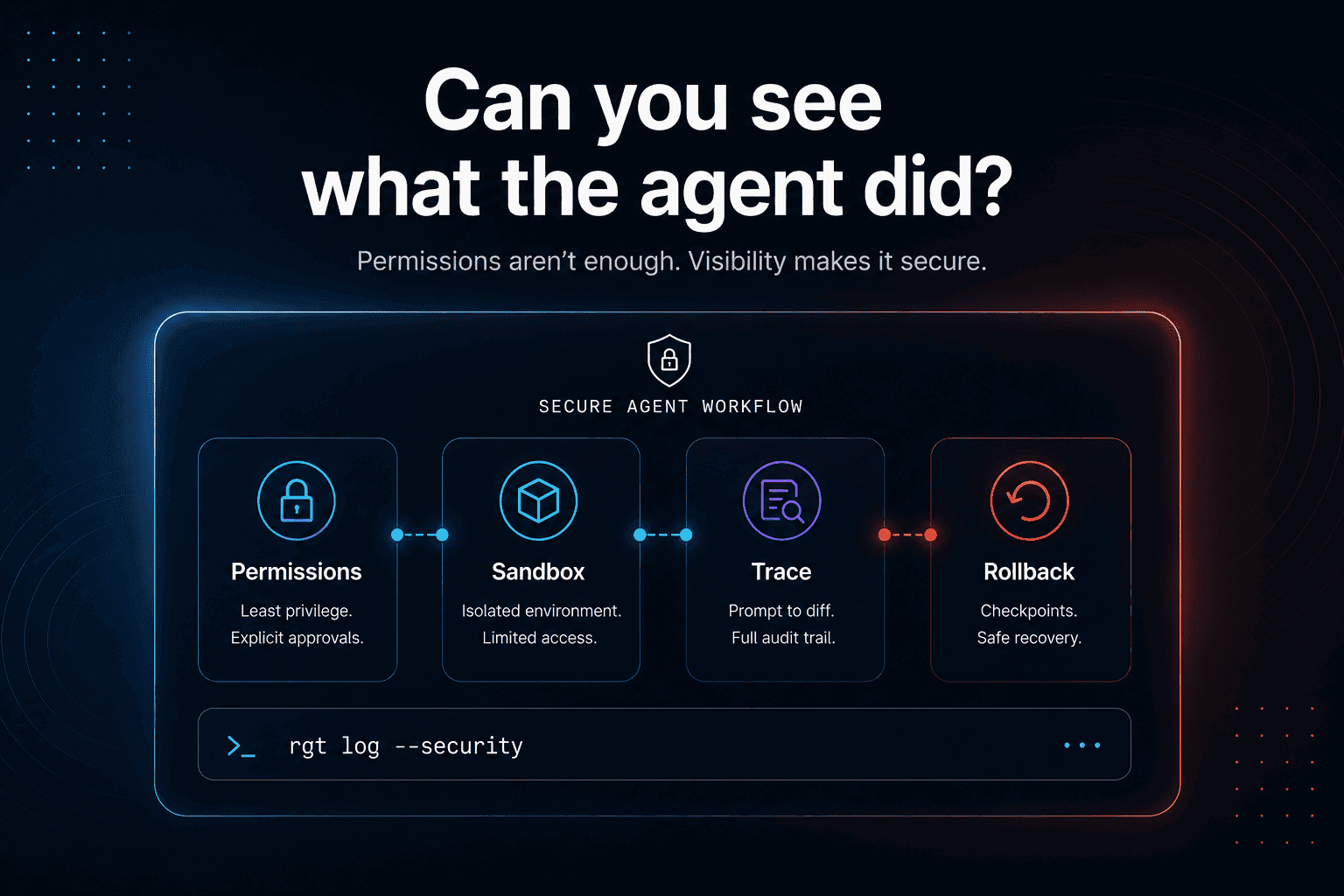
prompt-to-diff history
agent blame
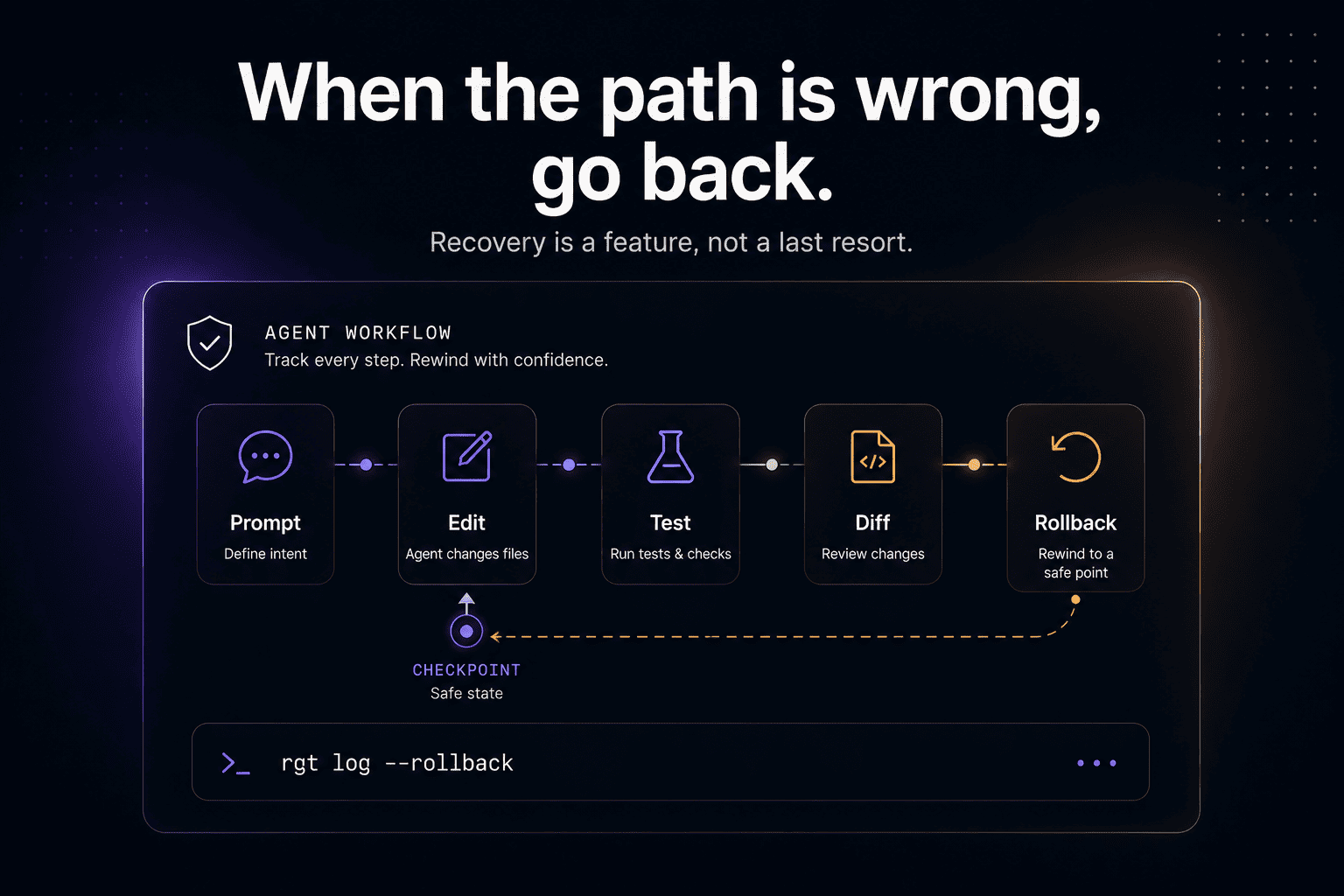
rollback points
human approval before merge
The PR is the artifact.
The agent session is the work.
AI agents are entering the pull request workflow
AI coding agents are no longer just autocomplete.
They can take a task, inspect a repo, make changes, run checks, and prepare a pull request for review.
GitHub’s Copilot coding agent documentation describes a workflow where Copilot can research a repository, create an implementation plan, make code changes on a branch, and let the developer review the diff, iterate, and create a pull request. GitHub also describes starting Copilot sessions from VS Code by typing a prompt explaining what you want Copilot to do.
That is a major shift.
The developer is not only writing code anymore.
The developer is assigning work, reviewing output, correcting direction, and deciding whether the agent’s work is safe to merge.
That makes review more important, not less.
The old PR review model is under pressure
Traditional PR review assumes a rough social contract:
AI agent PRs weaken that assumption.
The human may have initiated the task, but the agent may have done most of the implementation. The reviewer may see a clean PR description, but not know whether it reflects the actual work. The diff may pass tests, but still include unnecessary edits, scope creep, brittle changes, or test modifications that hide the real issue.
That creates a review gap.
The reviewer sees:
But they need to know:
What was the prompt?
Did the agent stay in scope?
Did it touch sensitive files?
Did it modify tests to pass its own implementation?
Which commands did it run?
Which checks failed first?
What changed after the first failure?
Which line came from which prompt?
Can the team safely roll this back?
A normal PR diff does not answer all of that.
Agent-authored PRs are already a research category
This is not hypothetical.
A 2026 paper introducing the AIDev dataset studied 932,791 agent-authored pull requests across OpenAI Codex, Devin, GitHub Copilot, Cursor, and Claude Code, spanning 116,211 repositories and 72,189 developers. The dataset was created because AI coding agents are now performing tasks like feature development, debugging, and testing in real projects.
Another 2026 study on failed agentic pull requests analyzed 33,000 agent-authored PRs and found that documentation, CI, and build updates had higher merge success, while performance and bug-fix tasks performed worse. The same paper reports that not-merged PRs tend to involve larger code changes, touch more files, and often fail CI validation.
That last point matters.
The harder the task, the more important the review layer becomes.
A clean AI agent PR is not automatically a safe PR
The problem is not that agents always write bad code.
The problem is that agents can produce code faster than humans can understand it.
A clean-looking PR can still hide:
overbroad changes
accidental behavior changes
incorrect assumptions
unnecessary refactors
fragile test updates
generated-code noise
security-sensitive edits
changes outside the requested scope
fixes that work locally but fail in production
The reviewer needs more than a diff.
They need the agent’s work history.
That means the review artifact should not be only:
It should be:
That is the missing review layer for AI agent pull requests.
What reviewers should ask before approving an AI-generated PR
When reviewing an AI agent PR, the first question is not “does the code look clever?”
The first question is:
Then:
1. What was the original prompt?
The prompt is the source of intent.
A PR that starts from:
Should not quietly become:
If the prompt was narrow and the diff is broad, that is a red flag.
2. What files did the agent read?
A coding agent can only reason from the context it saw.
If it changed retry behavior without reading the retry policy, that matters.
If it touched billing logic without reading payment docs, that matters.
If it modified a production path after reading only a test file, that matters.
3. What files did it change?
Use the file list as a scope check.
Ask:
Are these files expected?
Are any unrelated?
Are any sensitive?
Did the agent touch config, auth, payments, infra, or migrations?
Did the agent change tests and implementation in the same flow?
4. Which commands did it run?
A PR description saying “tests pass” is not enough.
You want to know:
Which tests?
Which command?
On what environment?
Did any command fail first?
What changed after the failure?
5. Did the agent change tests?
Test changes are not bad by default.
But they deserve attention.
An agent can fix a failing test by correcting the implementation.
It can also “fix” the test by changing the expectation.
Reviewers need to know which one happened.
6. Which prompt produced each risky line?
For small PRs, this might not matter.
For broad agent-authored changes, it matters a lot.
A reviewer should be able to inspect a line and ask:
That is agent blame.
7. Can we roll this back safely?
Every AI agent PR should have a recovery path.
If the change breaks production, can you revert the PR?
If only part of the agent’s work is bad, can you undo that part?
If the agent made a useful fix and an unnecessary refactor, can you separate them?
If the answer is no, the PR is harder to trust.
The PR description is not enough
AI tools can generate beautiful PR descriptions.
That does not mean the description is a reliable review artifact.
A PR description is a summary.
Review needs evidence.
A good AI agent review workflow should include the actual trace:
That is much more useful than:
The summary is helpful.
The trace is reviewable.
Human approval still matters
A recent 2026 study on AI coding agents across PR lifecycles describes a split between operational agency and merge governance. In simple terms: agents can increasingly initiate and carry PR work forward, but humans still generally retain review and merge authority.
That is the right direction.
Agents can do work.
Humans should own merge decisions.
But for human approval to mean anything, reviewers need enough context to make a real judgment.
Otherwise the review becomes ceremony.
That is not governance.
That is a rubber stamp with better branding.
A practical review checklist for AI agent pull requests
Use this checklist before approving an agent-authored PR.
Intent
Is the original prompt visible?
Is the task narrow enough?
Does the diff match the prompt?
Scope
Which files changed?
Are the changed files expected?
Did the agent touch unrelated areas?
Did it change tests, config, auth, billing, infra, or migrations?
Evidence
Which files did the agent read?
Which commands did it run?
Which tests passed?
Which tests failed first?
What changed after failure?
Code quality
Is the implementation minimal?
Did it introduce unnecessary abstractions?
Did it preserve existing behavior?
Did it follow project conventions?
Did it remove or weaken validation?
Traceability
Can you map the prompt to the diff?
Can you blame risky lines back to a prompt or session?
Is the agent session history available after merge?
Recovery
Can the whole PR be reverted?
Can individual agent steps be rolled back?
Is there a checkpoint before risky changes?
Is the final state reproducible?
Where re_gent fits
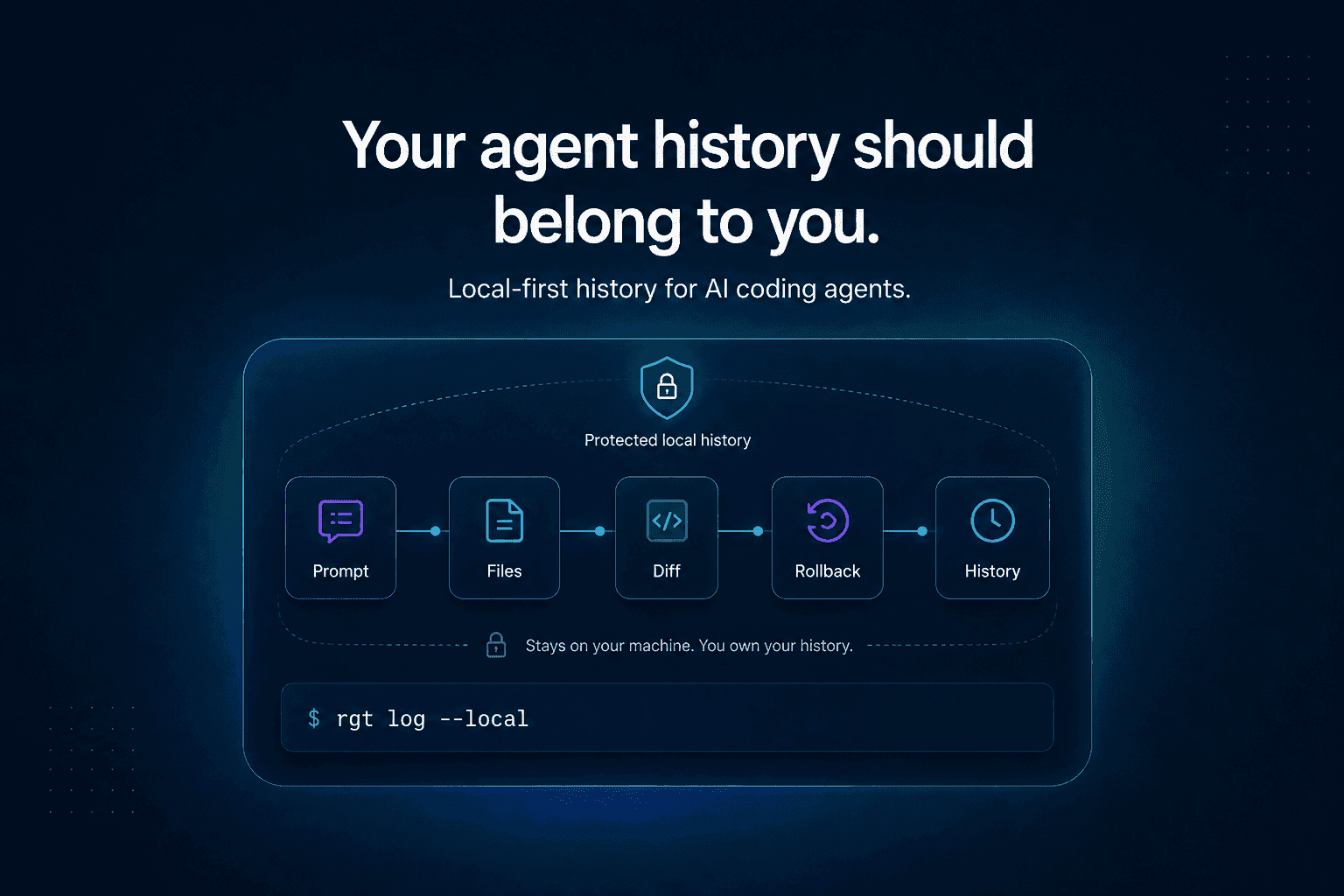
re_gent is open-source version control for AI coding agent activity.
It helps developers inspect the work behind agent-generated code:
what the agent changed
why it made those changes
which prompt caused a line
what happened across sessions
how to blame, log, and rewind agent activity locally
re_gent does not replace Git or pull requests.
It adds the missing agent history around them.
Git shows the code diff.
re_gent helps show the agent work that produced it.
That matters because AI-generated PRs should not ask reviewers to trust a summary. They should give reviewers a trace.
Where The Incident Challenge fits
We also built The Incident Challenge because production debugging reveals the same problem from another angle.
When a system breaks, the final fix is not enough.
You need the path: logs, runtime behavior, architecture, assumptions, failed attempts, and the reasoning behind the change.
AI agent pull requests are similar.
A PR is not only a diff. It is the result of an investigation, a plan, a set of actions, and a verification path.
If that path is missing, review gets weaker.
FAQ
What is an AI agent pull request?
An AI agent pull request is a PR where an AI coding agent performed some or all of the implementation work, such as reading the repository, creating a plan, editing files, running checks, and preparing changes for human review.
How should you review an AI-generated pull request?
Review the final diff, but also inspect the original prompt, agent plan, files read, files changed, commands run, tests executed, and whether the agent stayed within scope.
Are AI-generated pull requests safe?
They can be useful, but they require careful review. Research on failed agentic PRs suggests harder tasks like bug fixes and performance work can be more difficult for agents, and unmerged agent PRs often involve larger changes, more files, and CI failures.
What is agent blame?
Agent blame is like Git blame, but for AI coding work. It helps identify which prompt, session, or agent step produced a specific line or file change.
What is prompt-to-diff history?
Prompt-to-diff history connects the developer’s prompt to the actual code changes produced by the agent. It helps reviewers understand whether the final diff matches the original intent.
Should AI agents be allowed to merge code?
In most serious workflows, humans should retain merge authority. Agents can produce changes, but humans should approve the final merge with enough context to understand the work.
Does re_gent replace GitHub PR review?
No. re_gent is a local-first history layer for AI coding agent activity. It can support better PR review by preserving the agent session history behind the code changes.
Why is Git not enough for AI agent PRs?
Git tracks file history. It does not automatically track the prompt, agent session, tool calls, intermediate attempts, or reasoning path that produced the final diff.
Final thought
AI agent pull requests are not just bigger diffs.
They are a new kind of software artifact.
The reviewer is not only reviewing code.
They are reviewing delegated work.
That means the future of code review needs more than:
It needs:
Because when the author is an agent, the work history becomes part of the review.