TL;DR
AI coding work does not happen in one clean moment.
It moves across:
prompts
sessions
tools
branches
commits
tests
pull requests
human review
follow-up fixes
That creates a new problem:
That is the AI coding agent handoff problem.
A good handoff should preserve:
the original prompt
the agent’s plan
files read
files changed
commands run
tests executed
failed attempts
final diff
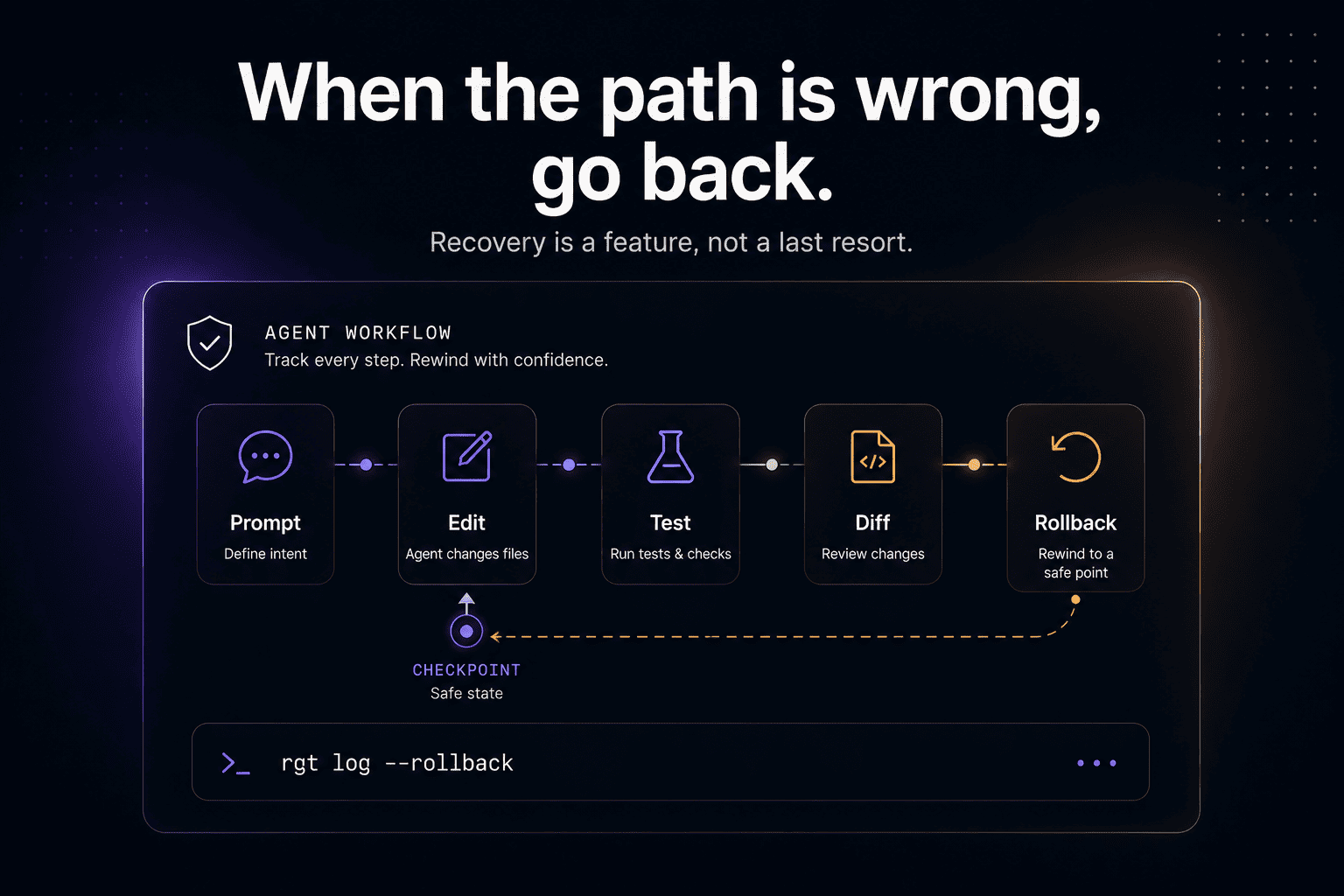
rollback points
the reason behind the change
Without that history, every new session starts by asking the same old question:
AI coding agents are creating fragmented work
Human developers already know the pain of bad handoffs.
Someone starts a bug fix, leaves a half-written branch, forgets to update the ticket, and disappears into meetings.
Now add AI agents.
A coding agent can start work in Claude Code. A developer can continue in Cursor. Another task can run in Codex. A PR can be opened in GitHub. A reviewer can ask for changes. Another agent can respond.
The work is moving.
But the context is not always moving with it.
The final branch may contain code.
The PR may contain a summary.
The chat may contain fragments.
The terminal may contain commands.
The actual path may be gone.
That is the handoff problem.
Context loss is not just annoying. It changes the work.
When an AI coding agent loses context, it does not simply become less informed.
It may duplicate work.
It may undo useful decisions.
It may repeat failed attempts.
It may broaden scope.
It may change tests without understanding why they were written.
It may create a second solution on top of the first one.
That is why session continuity matters.
The next agent does not need a poetic summary.
It needs an engineering record.
That is the difference between continuing work and starting over badly.
The old handoff artifact was a commit message
For human developers, handoff usually happens through a few familiar artifacts:
commit messages
pull request descriptions
issue comments
code comments
design docs
Slack threads
test names
tribal memory
That worked, imperfectly, because a human could usually explain the work.
With AI agents, the path can be less visible.
A commit message might say:
But the agent may have:
read five files
tried two approaches
changed a timeout
modified a test
reverted a helper
rerun one test
skipped another
left behind a broad diff
The commit message is not enough.
The handoff needs the session.
What is AI coding agent handoff?
AI coding agent handoff is the process of preserving enough context for another agent, developer, or reviewer to continue, inspect, or safely modify agent-generated work.
A good handoff answers:
The “next actor” can be:
the same developer tomorrow
another developer on the team
a code reviewer
a CI failure investigator
another AI agent
a release engineer
the person debugging production next week
A good handoff is not a transcript dump.
It is structured memory for the work.
Claude Code hooks show where workflows are going
Anthropic’s Claude Code hooks are an important signal.
Claude Code hooks let users run commands at key points in Claude Code’s lifecycle. Anthropic’s docs describe patterns like formatting files after edits, blocking commands before execution, sending notifications when Claude needs input, and injecting context at session start:
https://code.claude.com/docs/en/hooks-guide
The hooks reference describes hooks as user-defined shell commands, HTTP endpoints, or LLM prompts that run automatically at specific lifecycle events:
https://code.claude.com/docs/en/hooks
This matters because AI coding workflows are becoming event-driven.
Developers will increasingly want to capture, validate, format, block, notify, summarize, and inject context around agent actions.
That is the beginning of structured agent workflow history.
The next step is making that history durable.
Handoff should happen at lifecycle points
Agent handoff should not wait until the end.
By then, the work may already be too messy.
A useful system should capture context throughout the lifecycle:
Session start
What is the task?
What repo or branch is active?
What constraints were given?
What context was injected?
Before edits
What plan did the agent propose?
Which files does it expect to change?
What assumptions is it making?
After edits
Which files changed?
Which prompt caused each change?
Were the changes inside scope?
After commands
Which commands ran?
Which tests passed?
Which tests failed?
What changed after failure?
Before handoff
What remains unresolved?
What should the next agent or reviewer know?
Where is the rollback point?
This is the difference between a vague summary and a usable handoff.
Pull requests are becoming agent handoff points
GitHub’s Copilot coding agent docs describe a workflow where Copilot can research a repository, create an implementation plan, make changes on a branch, and let developers review the diff and create a pull request:
https://docs.github.com/copilot/concepts/agents/coding-agent/about-coding-agent
OpenAI describes Codex as able to write features, fix bugs, answer codebase questions, and propose pull requests for review, with tasks running in isolated cloud sandbox environments:
https://openai.com/index/introducing-codex/
https://developers.openai.com/codex/cloud
That makes the pull request a handoff object.
The agent does the work.
The human reviews the work.
Another agent may later revise the work.
The PR becomes the place where context must survive.
But a normal PR description is too thin.
A better AI-agent PR handoff should include:
original prompt
plan
files read
files changed
commands run
tests run
failed attempts
final diff summary
known risks
rollback point
Without that, the reviewer is reading the artifact without the work history.
Aider shows the value of Git-native agent history
Aider is useful as a reference because it treats Git as part of the AI coding workflow.
Aider’s documentation says it works best with code that is part of a Git repo and highlights workflows like using /undo, reviewing the changes Aider made in Git history, and managing a series of Aider changes on a branch:
https://aider.chat/docs/git.html
That is a strong signal.
AI coding tools need history because developers need recovery and review.
But Git-native history still needs agent-aware context.
Git can show that changes happened.
Agent handoff needs to show what the agent was trying to do when it made them.
The handoff document agents actually need
A useful AI coding agent handoff should be short, structured, and tied to the repo.
Something like:
That is not long.
But it is enough to continue.
Why summaries are risky
AI tools love summaries.
The problem is that summaries can hide the exact thing a reviewer needs.
A summary might say:
But the trace might show:
The summary is not false.
It is just incomplete.
That is why handoff should link to structured history, not replace it.
A good handoff has two layers:
Human-readable summary
Inspectable trace
The summary helps you start.
The trace lets you verify.
What makes a good agent handoff?
A good AI coding agent handoff has five qualities.
1. It is structured
Not a wall of chat.
Not a rambling final answer.
A clear record of task, context, actions, files, tests, and result.
2. It is tied to code
The handoff should connect directly to files and diffs.
If it says “changed retry logic,” the reviewer should know where.
3. It preserves failed attempts
Failed attempts are useful.
They tell the next agent what not to repeat.
4. It includes verification
Which tests ran?
Which failed?
Which passed?
What was not checked?
5. It includes recovery
Where can the next developer roll back?
Which checkpoint is safe?
What part of the work is risky?
Why context windows make handoff more important
Every AI coding workflow runs into limits.
Tools may compact context.
Developers may start new sessions.
Agents may lose memory of earlier decisions.
Even when context windows grow, the problem does not disappear.
More context does not automatically mean better history.
A giant transcript is not the same as a structured handoff.
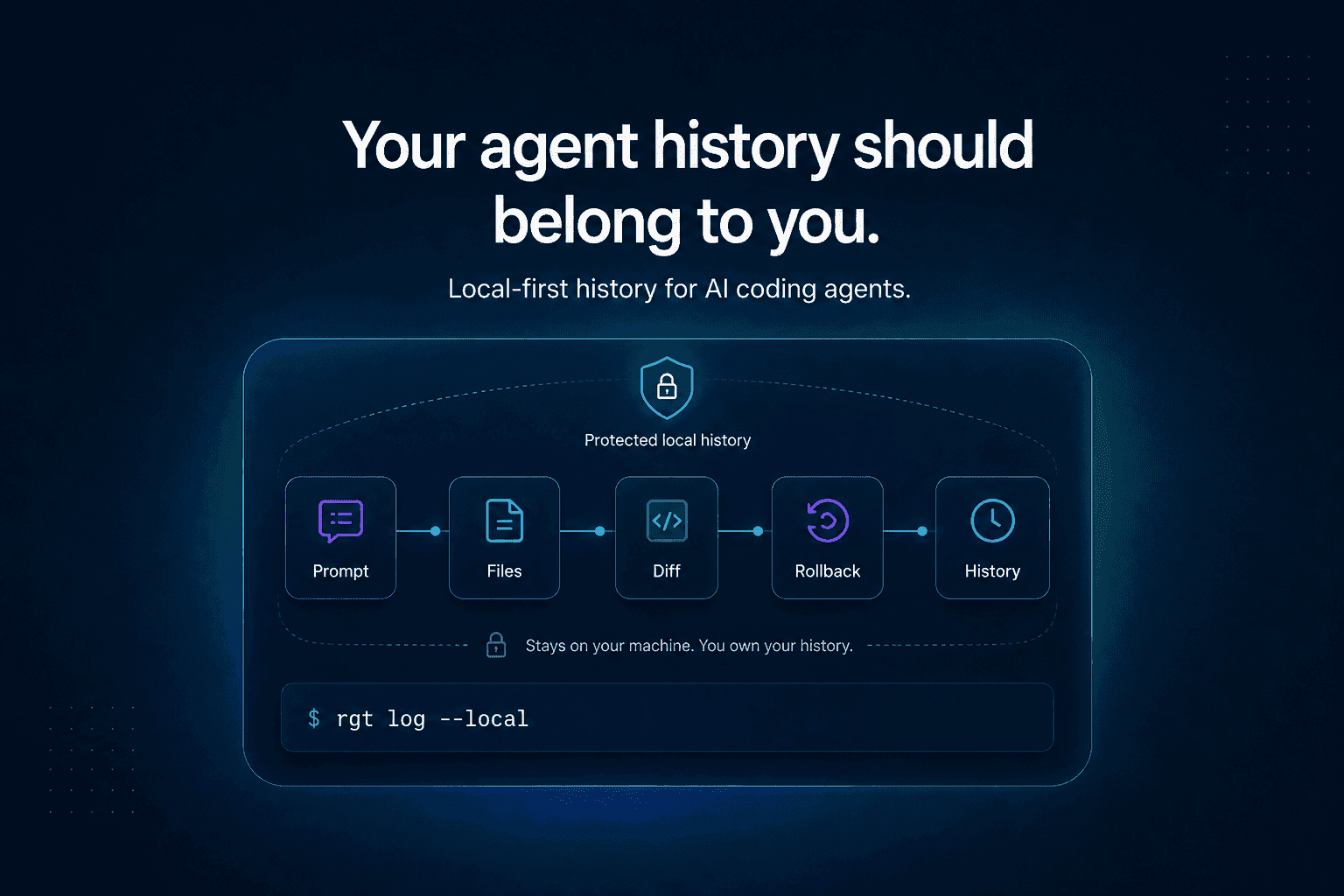
Developers need durable, queryable, local history.
Not just more tokens.
Handoff between humans and agents
The most important handoff is not agent-to-agent.
It is agent-to-human.
A human reviewer needs to know:
what the agent was asked to do
whether the agent stayed inside scope
which files changed
whether tests passed
what the agent failed at first
which prompt caused a risky line
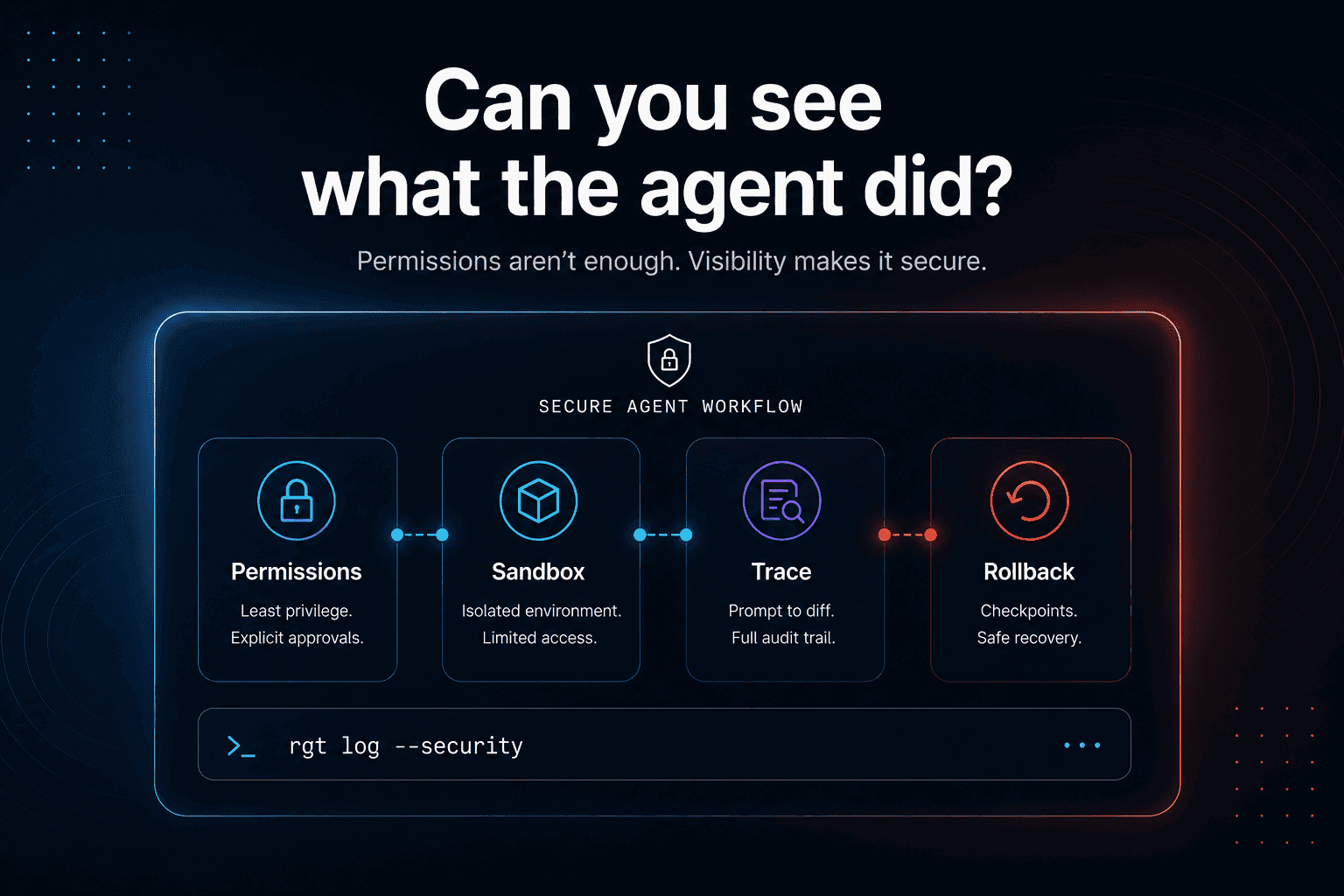
how to undo the work
That is how human approval stays meaningful.
Otherwise, the workflow becomes:
That is not review.
That is ceremony.
Handoff between agents
Agent-to-agent handoff will matter more over time.
One agent may investigate.
Another may implement.
A third may write tests.
A fourth may review.
Without durable session history, each agent starts from a lossy summary.
That creates loops:
The fix is not “make the agents smarter.”
The fix is shared work memory.
Each agent should inherit the structured state of the work, not just the latest files.
Where re_gent fits
re_gent is open-source version control for AI coding agent activity.
It is built for the history layer behind agent work:
sessions
prompts
files read
files changed
prompt-to-diff history
agent blame
rollback points
local-first workflow history
re_gent does not replace Git.
It adds the agent memory Git does not have.
Git tracks files.
re_gent tracks the agent work that produced those files.
GitHub:
https://github.com/regent-vcs/re_gent
Where The Incident Challenge fits
We also built The Incident Challenge because production debugging proves that context matters.
When a system breaks, the final fix is not enough.
You need logs, runtime behavior, architecture, failed attempts, assumptions, and verification.
Agent handoff is the same idea earlier in the workflow.
The next developer, or the next agent, should not have to reverse-engineer what happened from the final diff.
The Incident Challenge:
https://theincidentchallenge.com/
FAQ
What is AI coding agent handoff?
AI coding agent handoff is the process of preserving enough context for another developer, reviewer, or agent to continue or review agent-generated work safely.
Why do AI coding agents lose context?
Context can be split across sessions, chats, terminals, branches, pull requests, and tool logs. Agents can also compact or start fresh, which may lose the reasoning path behind the work.
What should an AI agent handoff include?
It should include the original prompt, agent plan, files read, files changed, commands run, tests executed, failed attempts, final diff summary, known risks, and rollback points.
Are PR descriptions enough for agent handoff?
No. PR descriptions are useful summaries, but they do not usually contain the full agent trace. A good handoff should link the PR to structured session history.
How do Claude Code hooks relate to agent handoff?
Claude Code hooks can run commands at lifecycle events, such as after edits, before commands, or at session start. This makes them useful for capturing, validating, or injecting context around agent workflows.
Is Git enough for AI coding agent handoff?
Git is essential for file and commit history, but it does not automatically capture prompts, files read, commands run, failed attempts, or agent reasoning. Agent handoff needs that extra layer.
What is agent session continuity?
Agent session continuity means preserving work context across sessions, so the next developer or agent knows what happened before and can continue without starting from scratch.
How does re_gent help?
re_gent tracks AI coding agent activity locally, including prompts, sessions, file changes, blame, and rollback points. That makes agent work easier to inspect, continue, and hand off.
Final thought
AI coding work is becoming multi-session, multi-agent, and multi-reviewer.
The final diff is not enough to carry the work forward.
The next person, or the next agent, needs the path.
Because the hardest part of agentic development is not starting work.
It is continuing it without losing what already happened.